Socratic Maths Mastery
for KS2 Scholars in Southampton
Join the 2026 Socratic Pilot. We do not offer remediation; we forge intellectual independence for the UK's most ambitious students in Southampton.
Regional Signature: Southampton Metropolitan Hub
The Southampton's maritime and engineering hub Report
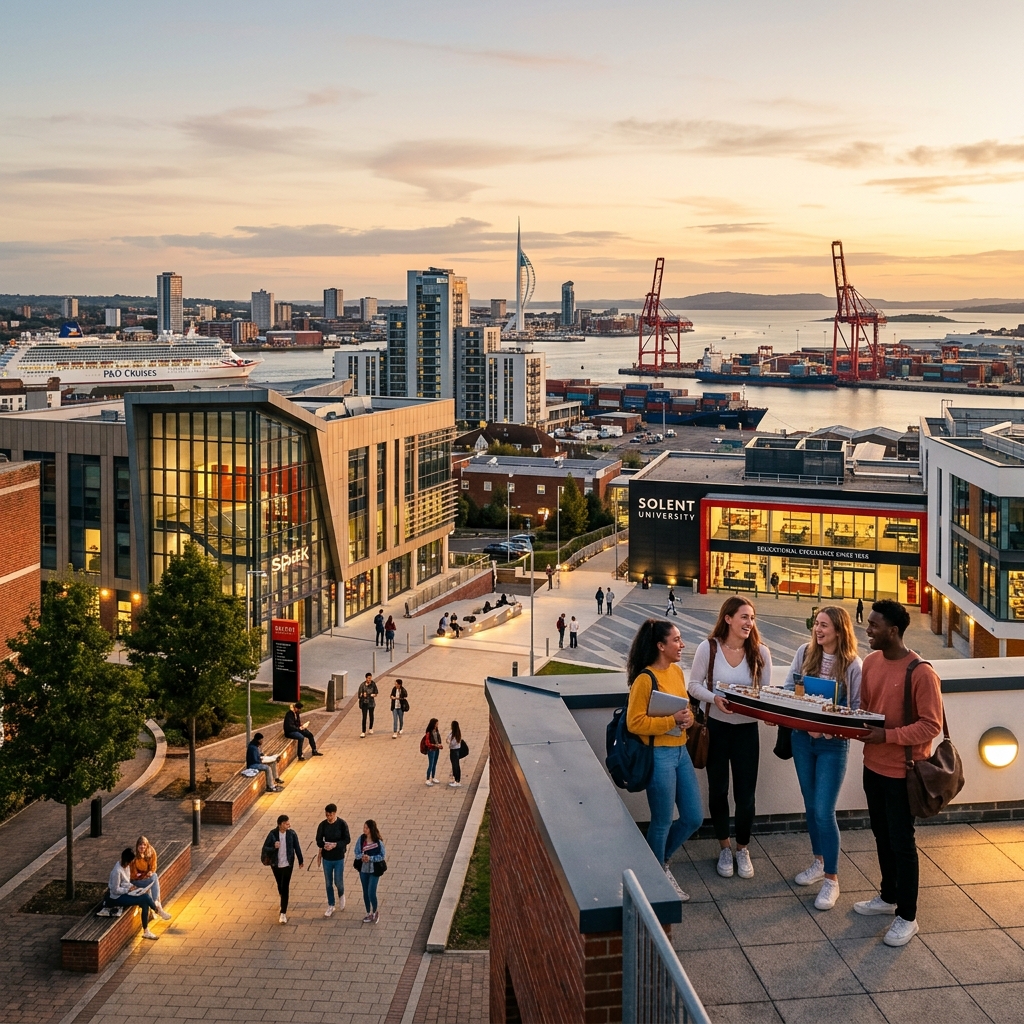
The transition from KS3 to GCSE in Southampton often highlights vocational and STEM-focused pathways, with schools leveraging connections to the city's maritime and engineering industries. Students are encouraged to see the practical application of their learning in local contexts.
Curriculum challenges in Southampton include ensuring a strong foundation in core sciences and mathematics to support its industrial specialisms, while also providing broad opportunities for all students. Integrating practical skills with academic rigour remains a key focus.
In Southampton, Socratic logic develops the critical problem-solving skills vital for its complex maritime and engineering sectors. Rote-learning offers fundamental facts, but Socratic inquiry in Southampton cultivates the capacity to analyse real-world challenges, question established methods, and innovate solutions, moving beyond simple memorisation to practical, applied intelligence essential for the city's industries.
Logistics and supply chain optimisation, financial services, and data modelling for port operations are significant sectors.
Investigate specialist academies in Southampton, particularly those with a focus on engineering, maritime studies, or sciences, for tailored academic pathways.
Metacognitive Independence
For our Junior Scholars, we move beyond simple fact-recall. We teach them 'how to learn' by engaging with the Socratic process. This builds the foundational curiosity required to thrive in later Key Stages.
A child who masters self-correction at KS2 will inevitably dominate the GCSE landscape in five years.
Foundational Maths First-Principles
Instead of teaching Maths as a set of rules, we treat it as a language of logic. We ask the questions that help Year 4-6 students deduce the laws of Maths themselves.
Tutoring Logic Comparison
Old-School Rote Tutoring
Remedial Class Support
- Passive answer-feeding creates cognitive dependency
- Reactive syllabus coverage (following the school)
- Standardised drill-work for mass-market testing
LumenForge Socratic Standard
Active Scholar Foundation
- The Productive Struggle builds neural independence
- By bridging the gap between classroom rote-learning and first-principles proof, we empower students to handle the 'unseen' problem types in Paper 1 and 2.
- Proactive Maritime, STEM, Vocational Skills Audit
* As an Institutional Standard, LumenForge supports and enhances existing classroom teaching through high-status Socratic enquiry.
Foundry Signature
Regional Cost Logic
Safety Audit
Start Your Mastery Audit
Identify the cognitive gaps in your Maths foundation today.
Parent Considerations
How does Socratic tutoring differ from traditional Maths help?
Traditional tutoring often provides the answer. Socratic tutoring provides the 'missing question' that allows the student to derive the mathematical proof themselves, building permanent neural pathways.
Sovereign Ecosystem
LumenForge is more than a mentor. It is a unified network of pedagogical tools designed for intellectual independence.
Revision Wiki
Deep-archive of Socratic study notes and syllabus-mapped logic.
Grade Calculator
AQA/Edexcel-synced grade forecasting and performance auditing.
Cognitive Assessment
Identify your critical thinking frontier and diagnostic gaps.
Tutor Review Meta
Head-to-head audits: Why Socratic methods dominate 2026 outcomes.