Socratic Maths Mastery
for KS2 Scholars in Oxford
Join the 2026 Socratic Pilot. We do not offer remediation; we forge intellectual independence for the UK's most ambitious students in Oxford.
Regional Signature: Oxford Metropolitan Hub
The Oxford's elite academic ecosystem Report
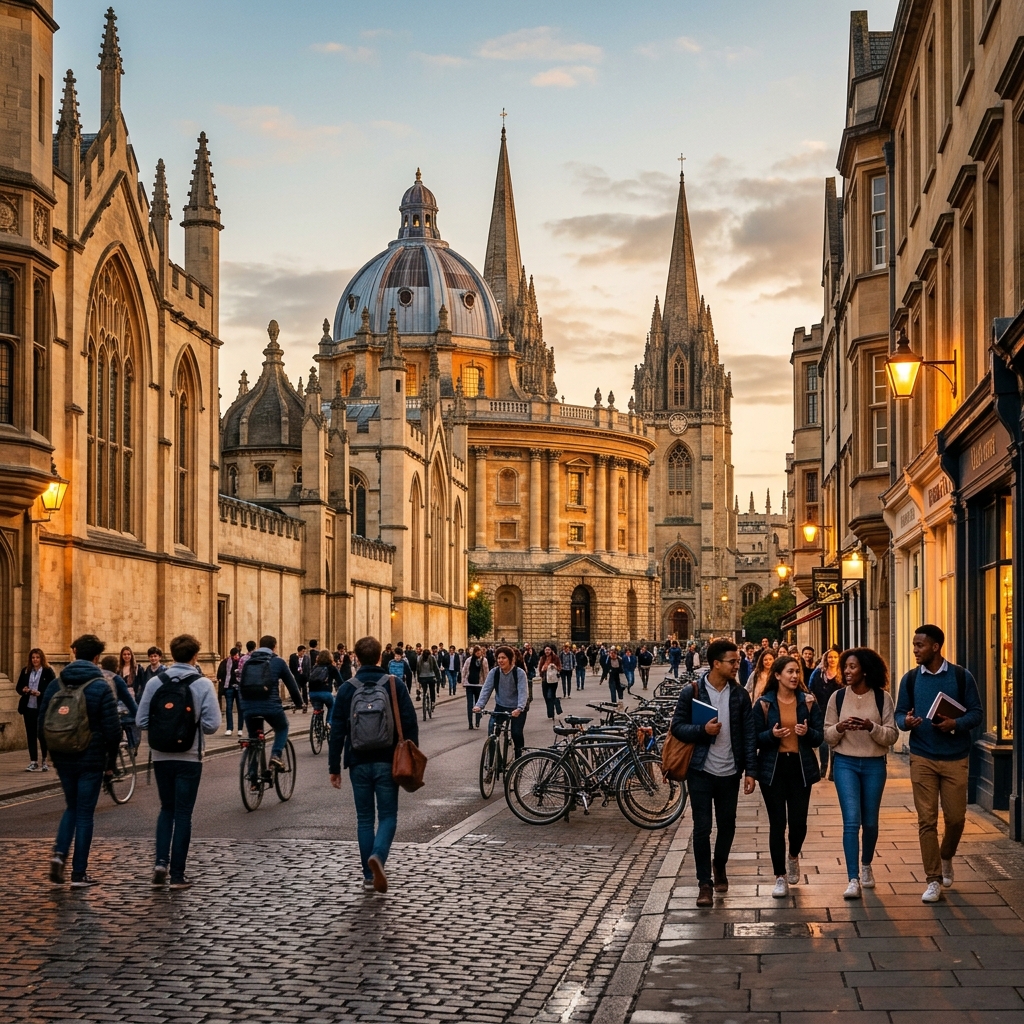
The transition from KS3 to GCSE in Oxford often involves accelerated learning pathways and a strong emphasis on independent study, preparing students for highly competitive post-16 applications. Schools often align their curricula with university-level expectations, encouraging a rigorous approach to foundational subjects.
Curriculum challenges locally include navigating a vast array of enrichment opportunities without over-scheduling, and ensuring depth of understanding beyond rote memorisation due to the city's inherent academic culture. There's also a pressure to engage with complex, extended projects from an early age.
In Oxford, Socratic logic directly mirrors the university's tutorial system, where critical questioning and defence of arguments are paramount. Rote-learning provides facts, but Socratic dialogue in Oxford cultivates the analytical prowess and intellectual independence required to thrive in its challenging academic environment, fostering true understanding over mere recall.
FinTech innovation, quantitative analysis, and econometric modelling are strong, driven by university talent and research.
Parents in Oxford should prepare for highly competitive school admissions, particularly for top grammar and independent schools, emphasising early academic preparation.
Metacognitive Independence
For our Junior Scholars, we move beyond simple fact-recall. We teach them 'how to learn' by engaging with the Socratic process. This builds the foundational curiosity required to thrive in later Key Stages.
A child who masters self-correction at KS2 will inevitably dominate the GCSE landscape in five years.
Foundational Maths First-Principles
Instead of teaching Maths as a set of rules, we treat it as a language of logic. We ask the questions that help Year 4-6 students deduce the laws of Maths themselves.
Tutoring Logic Comparison
Old-School Rote Tutoring
Remedial Class Support
- Passive answer-feeding creates cognitive dependency
- Reactive syllabus coverage (following the school)
- Standardised drill-work for mass-market testing
LumenForge Socratic Standard
Active Scholar Foundation
- The Productive Struggle builds neural independence
- By bridging the gap between classroom rote-learning and first-principles proof, we empower students to handle the 'unseen' problem types in Paper 1 and 2.
- Proactive Elite Academic Competition, High Expectations Audit
* As an Institutional Standard, LumenForge supports and enhances existing classroom teaching through high-status Socratic enquiry.
Foundry Signature
Regional Cost Logic
Safety Audit
Start Your Mastery Audit
Identify the cognitive gaps in your Maths foundation today.
Parent Considerations
How does Socratic tutoring differ from traditional Maths help?
Traditional tutoring often provides the answer. Socratic tutoring provides the 'missing question' that allows the student to derive the mathematical proof themselves, building permanent neural pathways.
Sovereign Ecosystem
LumenForge is more than a mentor. It is a unified network of pedagogical tools designed for intellectual independence.
Revision Wiki
Deep-archive of Socratic study notes and syllabus-mapped logic.
Grade Calculator
AQA/Edexcel-synced grade forecasting and performance auditing.
Cognitive Assessment
Identify your critical thinking frontier and diagnostic gaps.
Tutor Review Meta
Head-to-head audits: Why Socratic methods dominate 2026 outcomes.